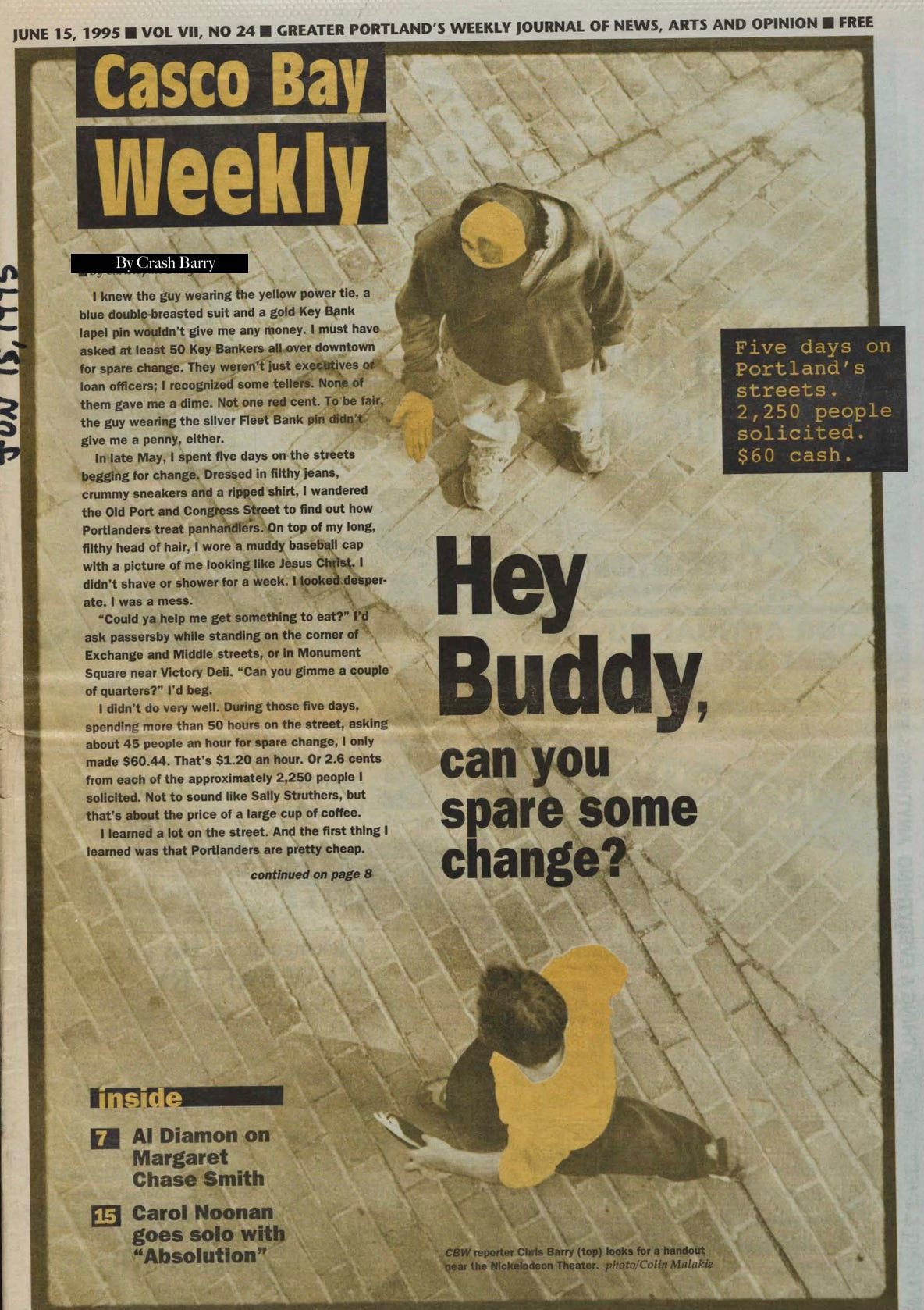
[[Author’s note: While laboring over a hot microphone during production of the forthcoming Fake Shaman true crime podcast, I was thinking back to the mid-1990s, when there were only a handful of people panhandling in Portland. Now, thanks to End Times Capitalism, we see spare-changers across Maine. This story from my archives, when I panhandled on the streets of Portland for five days and made a lousy sixty bucks.]]
Originally published June 15, 1995 in Casco Bay Weekly, photographs by the inimitable musician and artist Colin Malakie, a frequent collaborator back in the olden days.
I knew the guy wearing the yellow power tie, a blue double-breasted suit and a gold Key Bank lapel pin wouldn’t give me any money. I must have asked at least 50 Key Bankers all over downtown for spare change. They weren’t just executives of loan officers; I recognized some tellers. None of them gave me a dime. Not one red cent. To be fair, the guy wearing the silver Fleet Bank pin didn’t give me a penny, either.
In late May, I spent five days on the streets begging for change. Dressed in filthy jeans, crummy sneakers and a ripped shirt, I wandered the Old Port and Congress Street to find out how Portlanders treat panhandlers. On top of my long, filthy head of hair, I wore a muddy baseball cap with a picture of me looking like Jesus Christ. I didn’t shave or shower for a week. I looked desperate. I was a mess.
“Could ya help me get something to eat?” I’d ask passersby while standing on the corner of Exchange and Middle streets, or in Monument Square near Victory Deli. “Can you gimme a couple of quarters?” I’d beg.
I didn’t do very well. During those five days, spending more than 50 hours on the street, asking about 45 people an hour for spare change, I only made $60.44. That’s $1.20 an hour. Or 2.6 cents from each of the approximately 2,250 people I solicited. Not to sound like Sally Struthers, but that’s about the price of a large cup of coffee. I learned a lot on the street. And the first thing I learned was that Portlanders are pretty cheap.
Lots of people make their living foraging from the streets. Legions of men and women, aka bin tippers, push shopping carts full of returnables, searching every “Keep Portland Clean” trash barrel in hopes of finding another can or bottle. Waifish and pierced teenage girls sit in Exchange Street doorways, trying to bum money for another pack of smokes. Not as noticeable are the guys checking coin returns of pay phones and newspaper boxes. And now that summer is here, the busking street musicians enter the cityscape.
But the most visible moneymakers are the panhandlers. When a spare-changer enters your space asking for two bits, suddenly you’re faced with a split-second decision - can you spare some change?
If you’ve ever walked downtown, Bobby Reynolds has probably hit you up for change. He’s 35, but looks older. His face is weathered and scarred. He panhandles down by the Nickelodeon or on Congress Street, sometimes in Casco Bay Weekly’s doorway.
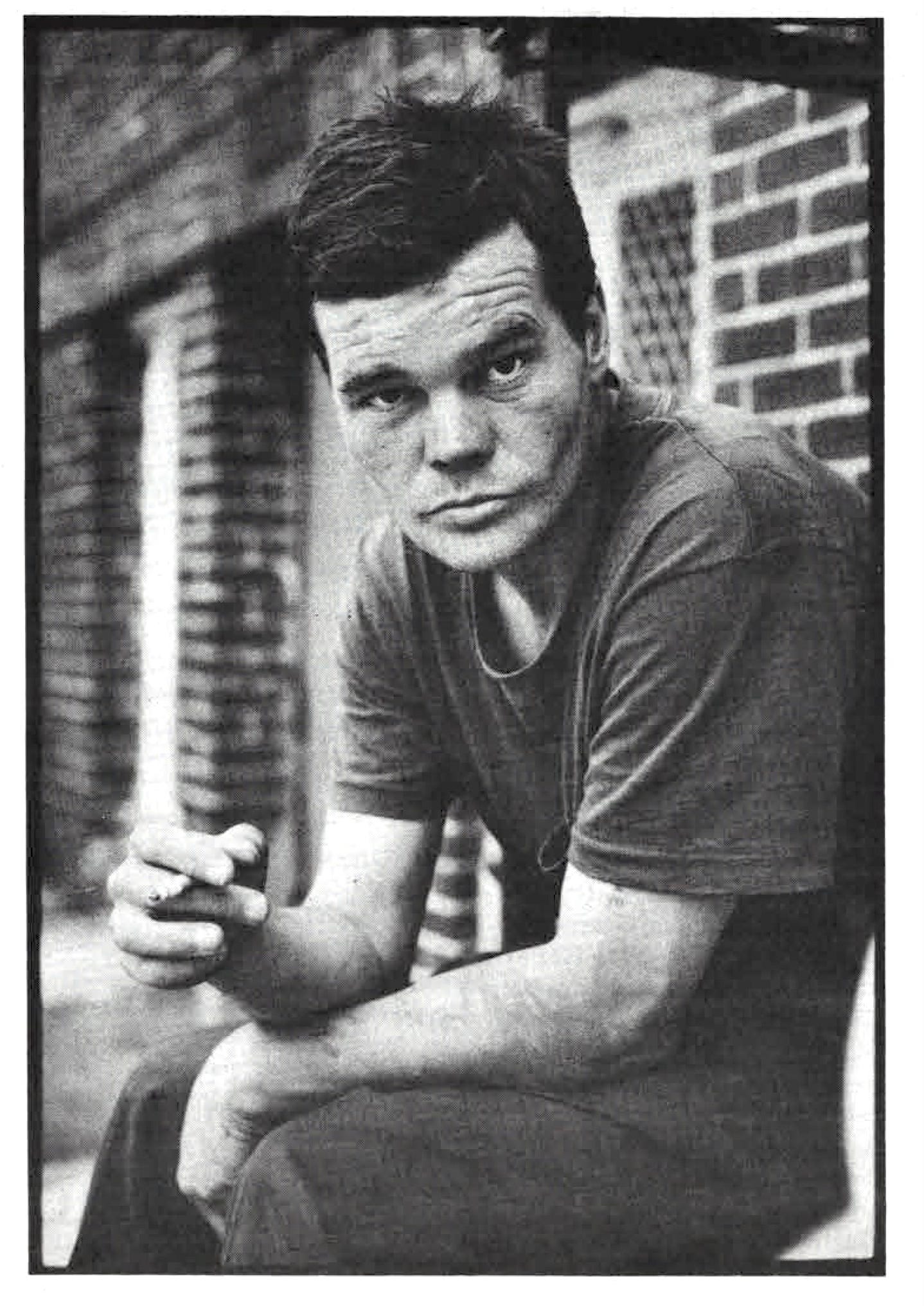
Reynolds doesn’t walk, he staggers. And he has the shakes — mostly because of an accident years ago, but his drinking doesn’t help much.
In 1979, he was working at a shoe factory in Lewiston. One night he was hitchhiking on a dark road in Richmond. A drunk driver in a pickup truck hit him. Reynolds was drunk, too. Serious head injuries kept him in the hospital for three months. After that he couldn’t keep a job. A year later he moved to Portland.
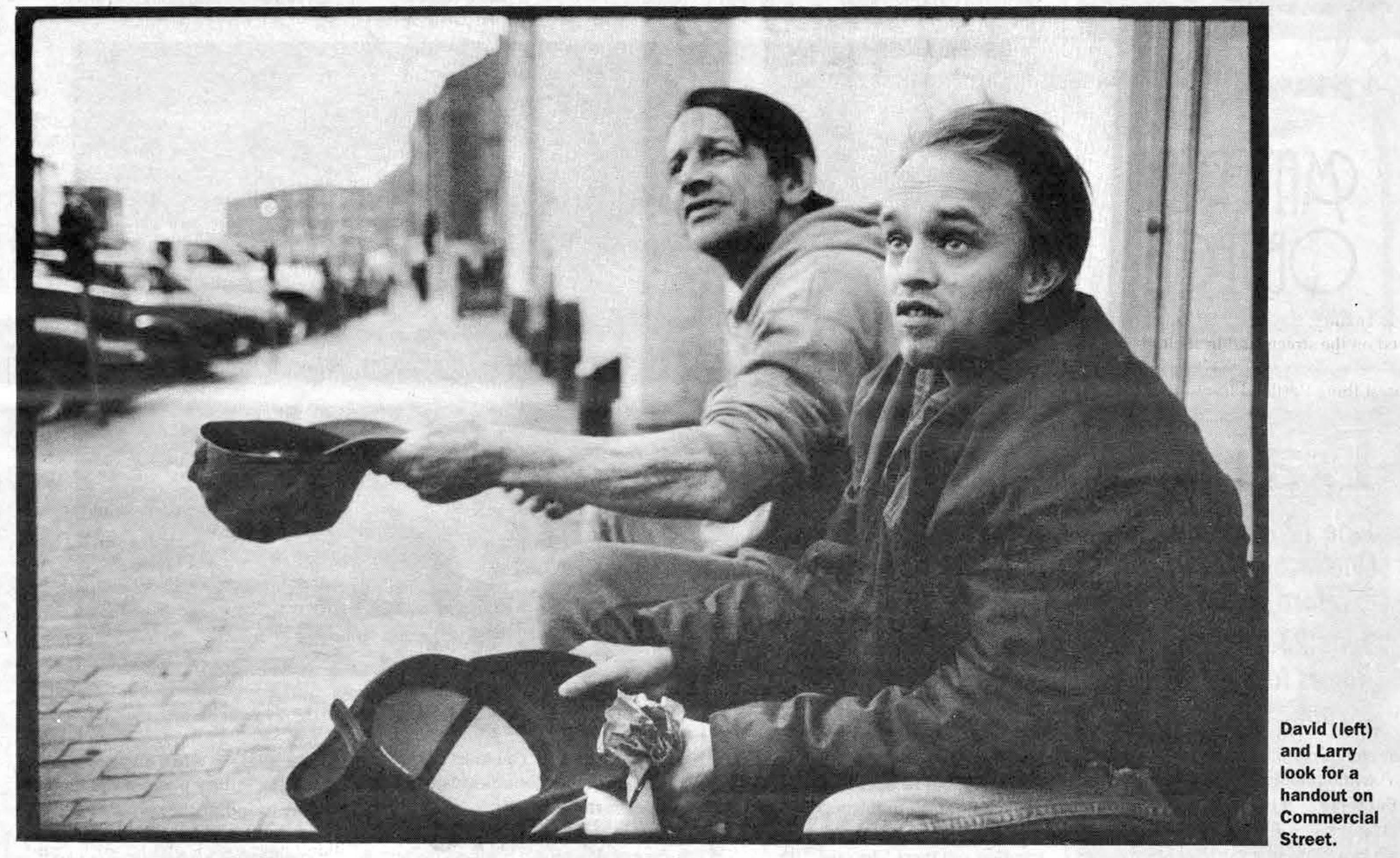
Ever since, Reynolds says, he’s lived on the streets and in shelters. He panhandles every day — he’s the closest thing Portland has to a professional panhandler. Spare-changers here don’t have gimmicks like they do in big cities. All they do is ask for change. And that’s not an easy way to make a living.
People react differently. Some say “sorry” and pat their pockets. After the first day of panhandling, I learned the difference between the sound of keys and the jingle of coins. Some dig into their pockets and come up empty. Some say they’re broke. Or that they’ll get you tomorrow. They try to make some sort of contact with you. They smile sadly. Others just say”no” without looking you in the eye.
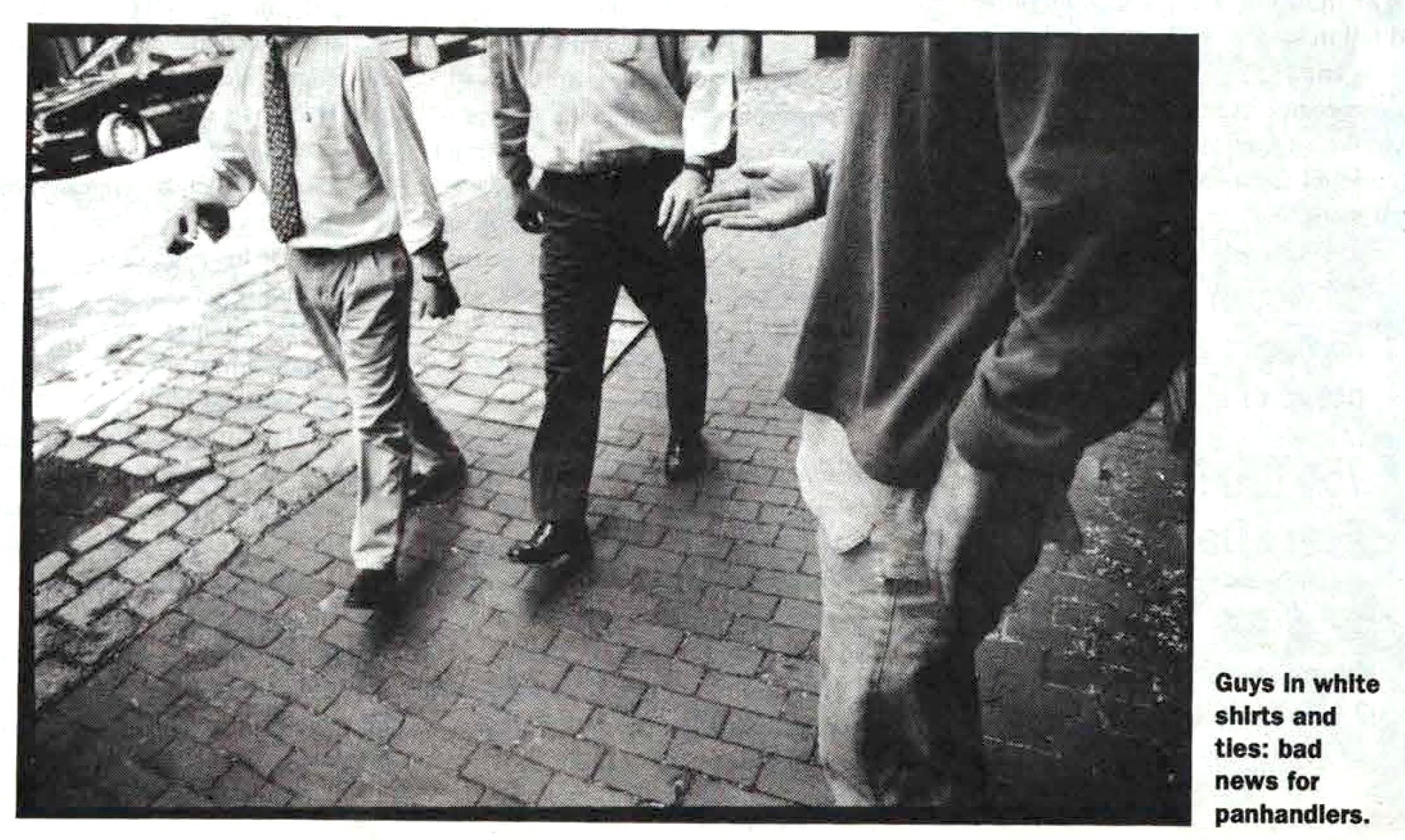
But some - mostly well-dressed white guys — walk by without so much as a word or a glance. I know they can hear and see me. Sometimes I’d fall in step with them, match their stride and ask again. They continued to ignore me and didn’t even bother to make an excuse. (Only a handful of women blew me off completely.)
It’s not like Portland is inundated with panhandlers. By my estimate, fewer than a dozen full-time spare-changers are out on the streets. This isn’t Boston or New York where a dozen people will bug you for a couple of quarters within a few blocks. In Portland, sometimes a couple of weeks go by between requests for change. A little eye contact and a sorry excuse softens rejection. Being ignored hurts. It made me angry, but I could walk off.
Panhandlers have no choice but to get used to it. People walk right by Bobby Reynolds too.
A couple of quarters?
Reynolds cares about his appearance, which sets him apart from many other panhandlers. Granted, he sometimes has a couple days of stubble on his face, but usually he’s clean-shaven. Almost every week, he gets a $5 haircut from one of the Congress Street barbers. And even though his clothes are dirty, his blue T-shirt is always tucked into his blue chinos. (It’s his only outfit, he says.)
Reynolds is an alcoholic. Sometimes he sleeps at the Arnie Hanson Center, aka “The Club,” a shelter on India Street. Now that the weather is nicer, he’ll be spending most nights on the streets.
Reynolds says bed space is scarce.
More homeless people migrate to Portland, like tourists, in the summer.
At least it’s warm out.
Although social service organizations like the Preble Street Resource Center could help Reynolds, he won’t take the first step. Reynolds rarely goes to Preble Street. Why? “I just don’t,” he said. Guys like Reynolds either don’t want help or they’re too far gone to care.
Each month Reynolds gets a disability check. What does he do with it? “I spend the money right away,” he said. If he doesn’t, someone else will. Others on the street know when his check shows up. “I get rolled,” Reynolds said. He’s been mugged countless times, sometimes by other spare-changers, sometimes by young punks.
What does he do with the money he gets panhandling? “I buy beer,” he said. In the morning he drinks Budweiser. In the afternoon he switches to Old Duke, which is sort of like wine. He buys smokes and a little food. And razor blades, shaving cream and haircuts.
One Wednesday afternoon, just after 5 o’clock, I worked the barren wasteland of the Key Bank Plaza on Middle Street. The bankers, in the shadow of Portland’s tallest corporate buildings, ignored me — per usual. So I watched Reynolds, across the street, work the corner by the Nickelodeon.
When you’re panhandling, the other side of the road always seems greener. Reynolds’ targets looked good, but it didn’t appear he was making much money. I crossed Middle Street and hung out nearby. I checked out his technique. Reynolds has a problem. It takes him awhile to get his patented “Can you spare two quarters?” pitch out. Plus, he mumbles. His targets were often out of earshot before he was done asking Yet people still give him money, though Reynolds doesn’t know how much he makes in a day. On several occasions, people gave him $20 bills. It happened two days in a row last summer. “I took the rest of the day off,” he said. Still, he’s lucky if he pulls in $15 after a day on the street.
Not a good wage, but Reynolds doesn’t have to pay rent. His expenses are just drink, smokes, food and various sundries.
Is he happy?
“I’m OK,” he mumbled.
But he’s not OK, at least by society’s standards. I see Reynolds all over town. Sometimes, when he’s drunk, he can barely sit up on a park bench. His memory is shot because of the accident and the booze. Each time I talk to him, I have to remind him why I’m asking questions. But you can’t blame Reynolds. Imagine where you’d be if you’d been seriously injured, lost your job, your home and didn’t have friends and family to help.
There’s a good chance you’d be like him.
Although the cops rarely bother him, he’s always on the lookout for the police. And his vision isn’t so great. While we were working the Nickelodeon corner, Reynolds looked down Middle Street and asked, “Are those cops?”
Two men in suits were walking towards us.
“No,” I said.
He asked for a couple of quarters
They walked by. One guy seemed insulted by being bothered by such an unkempt ruffian. He was wearing a fine suit, a crazy tie and some shiny shoes. His haircut must have cost at least $30. He had designer wire spectacles on his face and a leather briefcase in his hand.
“Don’t have a quarter to spare, do ya, pal?” I asked him. He ignored both of us. Reynolds wasn’t distressed. He just leaned against the wall of the movie theater.
“Do people harass you?” I asked.
“Yeah, sometimes.”
Reynolds doesn’t pester anyone. He doesn’t chase people on the street. Why should anyone bother him?
Out of my space
“Can you spare some change?” I asked an older guy wearing a pink golf shirt.
“No, and if you ask anyone else I’ll call the police,” he said.
Nobody before had yet even remotely suggested involving the cops. I turned and followed the guy. Why was he so concerned? All I did was ask for change. I pursued him, walking a half step behind, loudly asking why he wanted to call the police. I could tell he didn’t want to talk to me. He was an important man in a hurry. He already wasted enough time talking to a beggar.
“Panhandlers are bad for business,” he said. “People don’t want to shop where they are going to be pestered. Again he threatened to call the cops if I panhandled another person.
Immediately I turned and started asking every passerby for lunch money. My oppressor went to a yellow call box and spoke with the authorities. He went into a nearby copy shop. The cops never showed. I figured I’d do a little detective work. I tailed him. I made sure he saw me. He ducked into Bookland, going out the back door. On instinct, I checked some law offices. But no one had seen a big man in a pink shirt.
Back out in Monument Square, I spotted something big and pink through The Surplus Store window. It was my man, Larry Rose, who, it turned out, was the store’s owner. I remembered I bought a pair of Chuck Taylors at his store a couple of weeks before. Next time I’m going to Levinsky’s.
The following day, I panhandled the square again and waited for Rose.
I watched him leave the store. By the Burger King, he spotted me.
“Could you help me get some lunch, sir?” I asked when he got close.
“You don’t remember me, do you?” he replied.
I stared blankly.
“Yesterday I told you to stop doing this or I’d call the police,” he said
“Why?” I asked.
He repeated that guys like me were bad for business. Slipping out of character a bit, I asked him, “You really believe that panhandlers are stopping the revitalization of the downtown?”
“Yes,” he said
“It’s not because of panhandlers,” I said. “It’s because there’s no parking and because there’s a big mall in South Portland!”
He told me he was calling the police.
“Fine,” I said.
I stood in front of his store for 15 minutes. I made a dollar and some change.
The next day, after shaving off my beard and showering, I stopped by The Surplus Store to chat with Rose. I told him I was the guy who panhandled him on the street.
Rose’s story didn’t change. He still blamed spare-changers for driving the shoppers away, although he admitted parking was an issue too. Yet, the bulk of the blame went to street people.
*Most ladies used to shop downtown,” he said. “Now they don’t. They don’t like being accosted by panhandlers.”
But there are only a handful of them in the city.
“Well, it’s not as bad as it used to be,” he said. Rose insisted that he isn’t heartless.
“We give to charity,” he said.
“These people don’t always get help from charity,” I said to him. “What’s the harm in letting them ask for money?”
“It’s bad for business,” he repeated. Besides, he said, the homeless scare people. “My wife,” he said, “she’s afraid of the drunks.”
Spare-changers aren’t to blame for the lack of downtown shoppers, at least according to Police Chief Mike Chitwood. But he does believe panhandling is a problem. “There’s a core group of very aggressive panhandlers out there,” he said. “It’s almost strong-arm robbery.”
While Chitwood admits the aggressive panhandlers are in the minority, he still wants the streets cleaned up. “The unfortunate thing is that we can’t get anyone to take a complaint out,” he said. A couple of years ago, police sent out undercover officers, hoping they’d be panhandled. Some spare-changers were arrested, but when the cases got to court, little or nothing happened.
But Barbara Hager of Portland’s Downtown District (PDD), a downtown improvement group, doesn’t think panhandlers are a real issue.
“We certainly don’t have the problems the big cities have,” she said. Instead, Hager contends, it’s the perception of panhandlers, especially by employees of downtown businesses. When I told Hager that someone threatened to have me arrested, she said, “You must have asked one of the Monument Square businessmen.”
Last year the PDD conducted a survey of downtown business owners and employees. While panhandling wasn’t actually targeted in the survey, Hager said, many respondents were concerned about spare-changers.
And some panhandlers merit concern. Like the man who wears a blaze-orange hunting cap. I see him all over town. He’s different from Reynolds. On a recent afternoon, when I wasn’t panhandling, I watched him as he fell to the sidewalk on Congress Street. He was drunk. After a minute or so he struggled to his feet. He approached a guy walking down the street. He drunkenly asked for money. He got some.
An hour later, I was walking on Congress Street with a friend. The guy came up to us and asked for some change. My friend, a hard-nosed reporter, gave him some money. But I didn’t. He was loaded and aggressive. I could see why people would be scared of him. When I told him he should probably find a place to sleep, he said “I’m a veteran. Shoot me in the mouth and kill me.”
The Flighty Buck
Some people are actually generous to panhandlers. How else could I have made $60 and some change? Panhandling is like hitchhiking — you never know who’s going to give you a lift.
l asked two men standing by the door of the Charles Schwab brokerage firm on Middle Street for change. The older man, smoking a pipe, was probably in his mid-60s. The other, about 45, looked like he was doing some serious sucking up. He was about to give me the brushoff, when the pipe smoker said, “Let me see what I’ve got here.” Both men reached into their pockets. The pipe smoker hesitated. The other guy pulled out a bright shiny quarter and gave it to me gallantly. The pipe smoker pulled a dollar bill out of his pocket and slipped it into my hand.
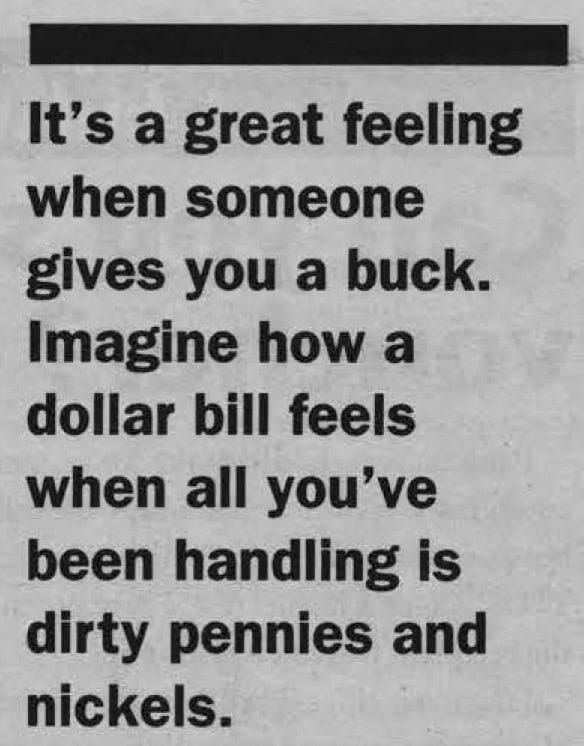
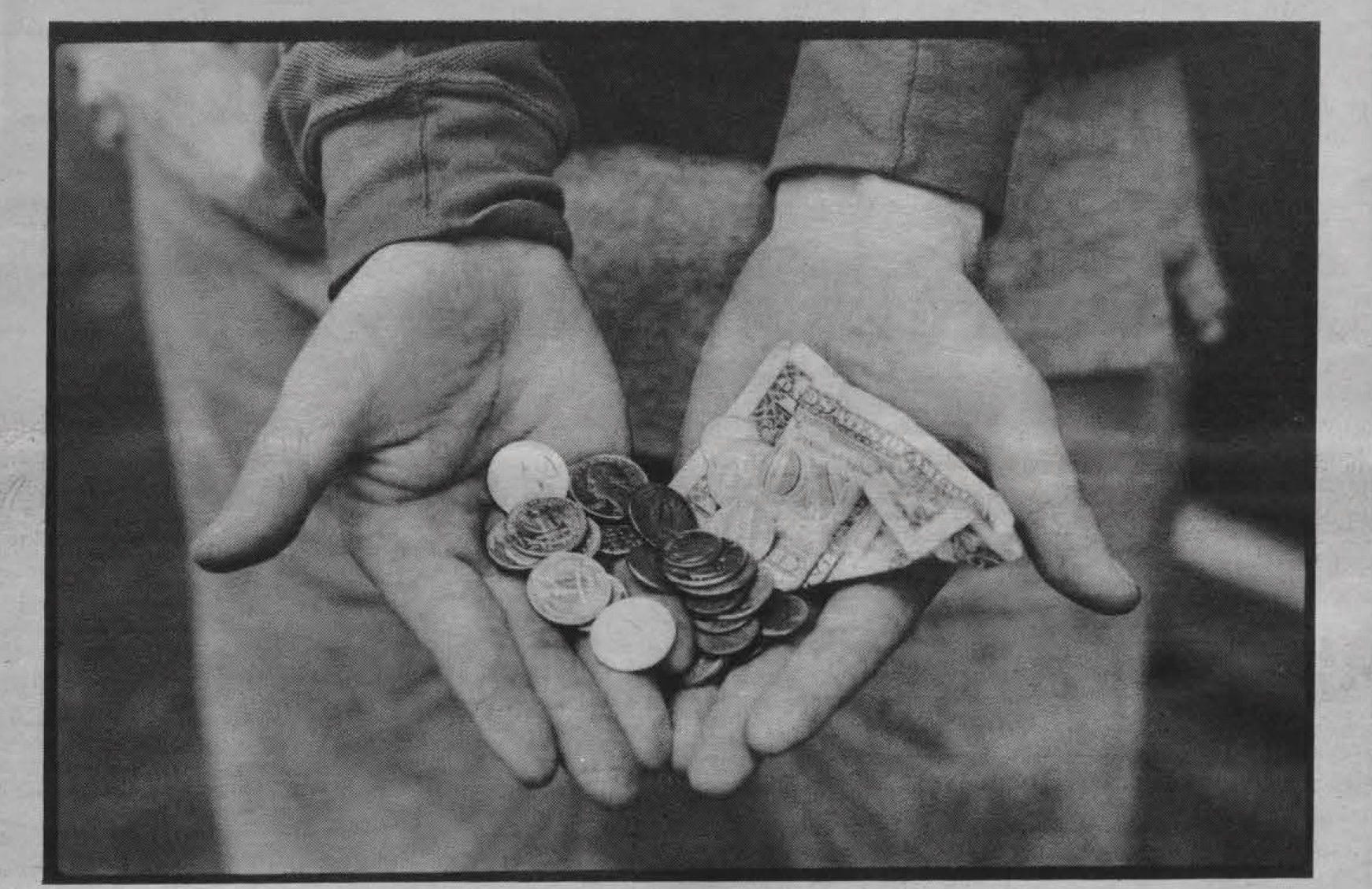
It’s a great feeling when someone gives you a buck. Imagine how a dollar bill feels when all you’ve been handling is dirty pennies and nickels. A guy rounding the corner by the Nickelodeon — in his mid-20s struggling with a backpack, a paper bag and a soda - gave me two dollars. He spilled his drink trying to get me the cash. And a beautiful woman by Java Joe’s gave me a buck. So did a woman who I think works at the library. And a couple others gave me a greenback. Dollars made me feel pretty great.
But bills are rare. A more frequent donation, especially in the Old Port, is 26 cents. Why? What costs 74 cents? A shaggy-haired, 20-year-old guy on Middle Street gave me a penny and quarter.
“I just found it on the sidewalk,” he said. “I guess it’s for you.”
Other than Larry Rose of The Surplus Store, only a pony-tailed waiter at Walter’s Cafe who told me to “beat it!” and some crazy old guy by the library who screamed “get a fucking job!” at me seemed bothered by my presence.
I knew some people didn’t have change when I asked for it. They were being honest, I could tell. When they said, “sorry,” I believed them. I was just grateful they spoke to me. And I was grateful to the people who helped me out.
Some people don’t give to panhandlers because they don’t want to contribute to their vices. “They ask themselves ‘Should I give them something that’s only going to buy alcohol or drugs?” explained Hager of the PDD. “They don’t believe they’re making the panhandler’s life any better” by dropping some change into an outstretched palm.
But it does. Not everyone can be saved, unfortunately. And everyone knows that the money most spare-changers make usually goes to booze or other vices. Many of these people have nothing else. It would be great if they dried out, found a place to live and got a job. Or it would be great if they stopped drinking. But that won’t happen.
Bobby Reynolds has spent the last 15 years on the street. I spent five days. Reynolds sleeps in shelters, on the street or in the county jail. I sleep on a futon. Reynolds doesn’t eat much. I eat three meals a day. He owns one set of clothes. I own several.
I went out looking for Reynolds last week. I didn’t see him for a couple of days, and we needed photographs for the story. I searched for him in all his usual haunts. I went down to Len’s Market on Cumberland Avenue, where Reynolds sometimes buys beer. There was a paddy wagon and an ambulance across the street. And Reynolds was there too, leaning against a wall. The police and paramedics helped him into the paddy wagon. Seems as though Reynolds was drunk and crab-walking across the street. People called the police.
The cops gave him a ride down to Arnie Hanson. One of the paramedics said it happens “regularly.” He predicted Reynolds would only last another “four or five years.”
I’ve seen him sober and drunk. When he’s sober, all he wants to do is drink. One day we agreed to meet for breakfast the next morning. But when I found him, on his way to Joe’s Smoke Shop at 6 a.m., Reynolds decided breakfast wasn’t on the agenda.
“I’m not hungry,” he said. “I’m thirsty.”
So now, when I see Reynolds sometimes I’ll give him enough change to buy a 12-ounce Budweiser.
Sometimes I won’t. But at least I’ll say hello, ask how he’s doing and offer to get him something to eat. I’ll talk to him. It’s the least I can do.
[[Update: For the record, I gave the sixty bucks earned while panhandling to Bobby Reynolds and other Portland spare-changers. Needless to say, this piece pissed off a whole bunch of people. Oh well. Panhandling — and journalism — are constitutionally protected free speech.
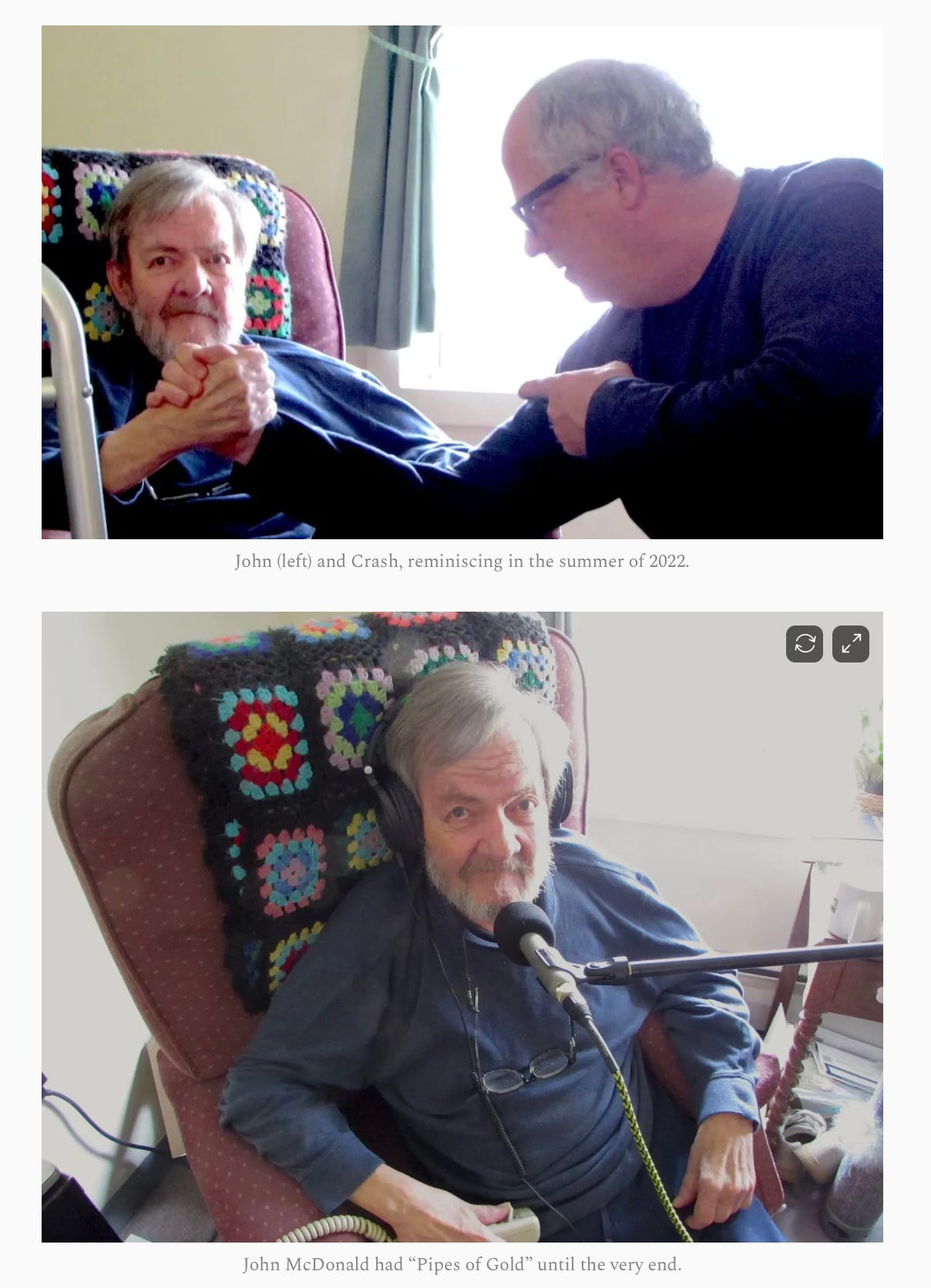
This piece birthed a friendship with Bobby Reynolds that lasted until I left Portland in 2003. (He’s the fella I call “Philly” in Flashback Number 1.) Plus, this story was the impetus of Maine storyteller John McDonald and I becoming pals. John HATED the story and criticized the piece — multiple times — on his radio talk show on WGAN. He did enjoy the writing, though.
A month or two later, I was invited by WGAN to audition for the host gig of the WGAN Morning Show. As part of the trial, John and I co-hosted a week of morning shows and became fast friends with the ability to argue, respectfully, about all sorts of issues. Unfortunately, I didn’t get the host job. Instead, WGAN offered me the executive producer position, which I took. A year later, I was fired, but John and I remained very good pals until the day he died in December 2022. You can listen, here, to my remembrance of my pal.]]
For seven dollars a month, (or $75 annually) you can support independent journalism that goes places other media won’t AND get early and ad-free access to episodes of Fake Shaman.